
Polyjacking vs Mudjacking: How Each Lifts a Fort Lauderdale Slab
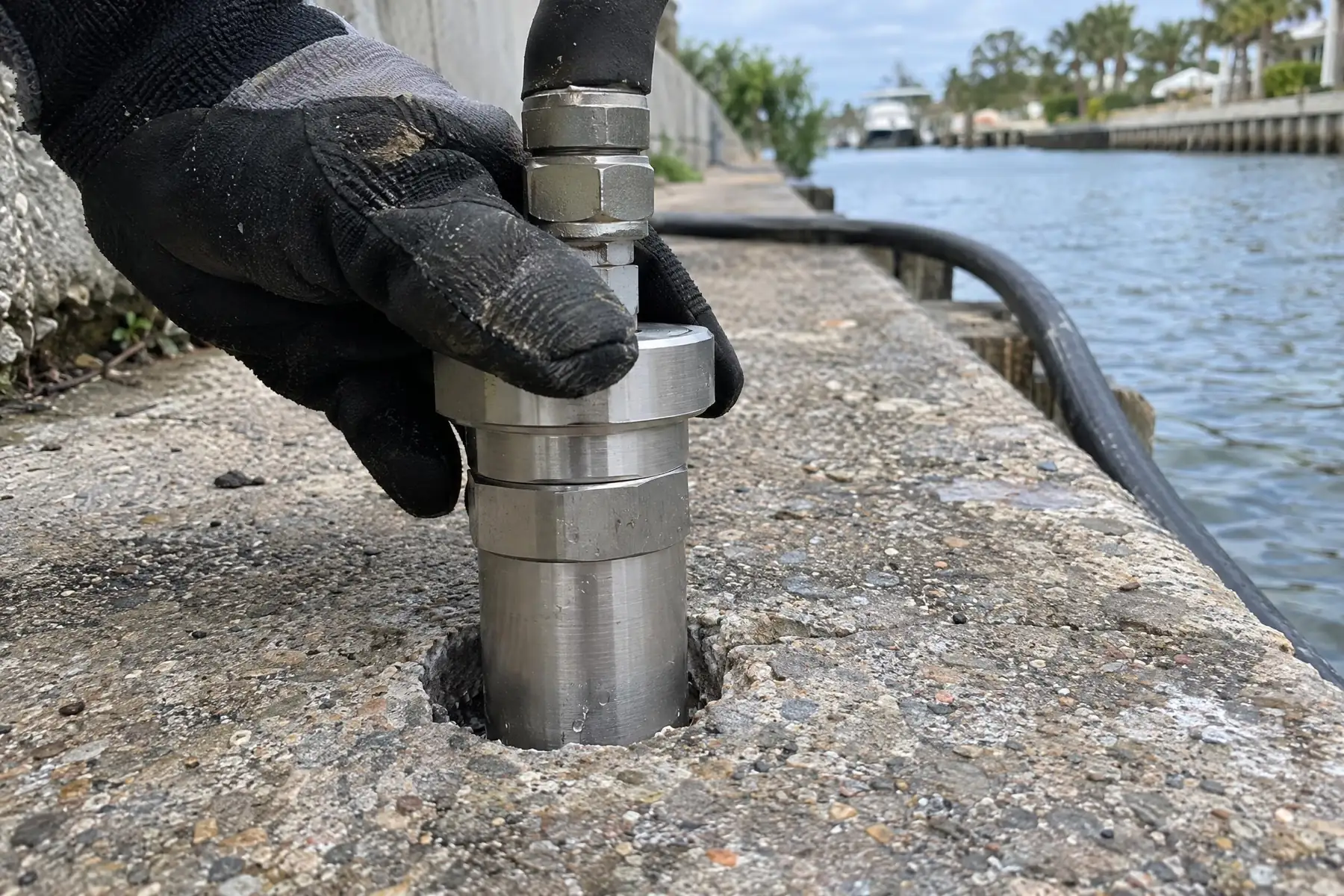
Polyjacking sends liquid polyurethane foam through penny-size holes, under pressure. The foam swells, firms the soil and raises the slab, with gauges signaling when the base is solid. Mudjacking also bores holes, but it pumps a cement-based slurry. Slab jacking vs foam, then, is a question of what gets pumped beneath the concrete.
Slurry lifts by weight and volume, whereas foam lifts by expansion. A small shot of foam multiplies in volume and wedges into the narrowest gaps. Because foam weighs less, it puts almost no extra weight on soft ground. Mudjacking needs bigger holes, and the slurry must set before the slab reaches full strength. Either approach demands a watchful crew, since lifting too far cracks the concrete. A level and the gauges steer the work, and the crew stops once the surface matches the slab beside it.
Both methods suit an intact slab, so the decision rests on two things: the ground beneath it and how quickly you need to use it again. Neither replaces a careful estimate.
Appearance and cleanup differ as well. Foam holes are small and vanish under a sanded patch, while slurry holes are wider and leave a larger round mark. Neither method is messy in the hands of a careful crew, but slurry needs more room for hoses and a mixing truck, so a tight side yard can tip the choice. The sections that follow give numbers for each, and the final one maps them onto your own surface.