
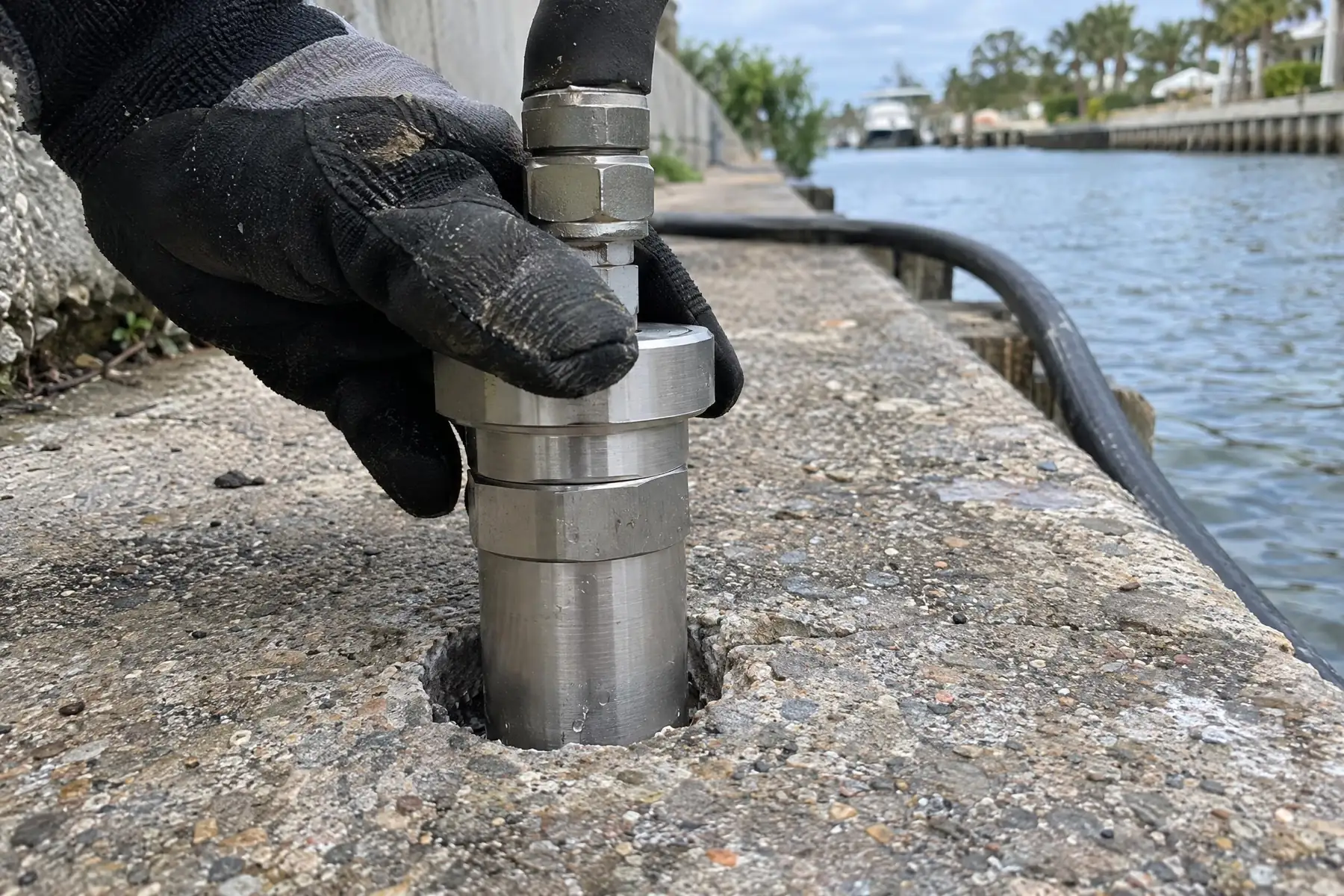
How Concrete Leveling Works: Why a Fort Lauderdale Slab Sinks First
A slab is only as steady as the ground under it. When that ground weakens or settles, the concrete loses its support, flexes, cracks and drops, leaving trip edges along the seams and standing water where the slope used to be. Leveling repairs the support as well as the height, so the work begins with the soil.
Fort Lauderdale’s ground is fine sand, and loose sand compacts badly. Federal soil surveys name Basinger, Boca, Hallandale, Immokalee and Dade fine sand, and in the wettest months groundwater reaches 0 inches in Basinger and Boca fine sand. Moving water carries grains out from beneath the slab, and the slab settles into the pocket left behind each season.
The Fort Lauderdale-Hollywood station records about 56 inches of rain in a normal year, and nearly 70 percent of it arrives between May 15 and October 15, the wet months. Runoff slips beneath slab edges and takes sand with it, so corners and joints sink first. By October a slab that was flat in the spring can sit an inch low, and the gap widens until the void is packed. The crew reads the place where a slab dropped first, because it marks the deepest void, and the pattern of holes follows from that. A void at a driveway corner calls for a different layout than one along a pool deck edge.
Age and setting matter too. A slab poured over thin fill, or laid beside a canal or a pool, sits where water moves most freely, so it settles sooner than a slab on firmer ground. None of this means the concrete was poured badly. The ground changed beneath it, and leveling answers that change by restoring the support the ground no longer provides.